Top Natural Supplements for Better Vision
From carotenoids to antioxidants — the most researched natural eye health interventions used by functional medicine and naturopathic practitioners worldwide.
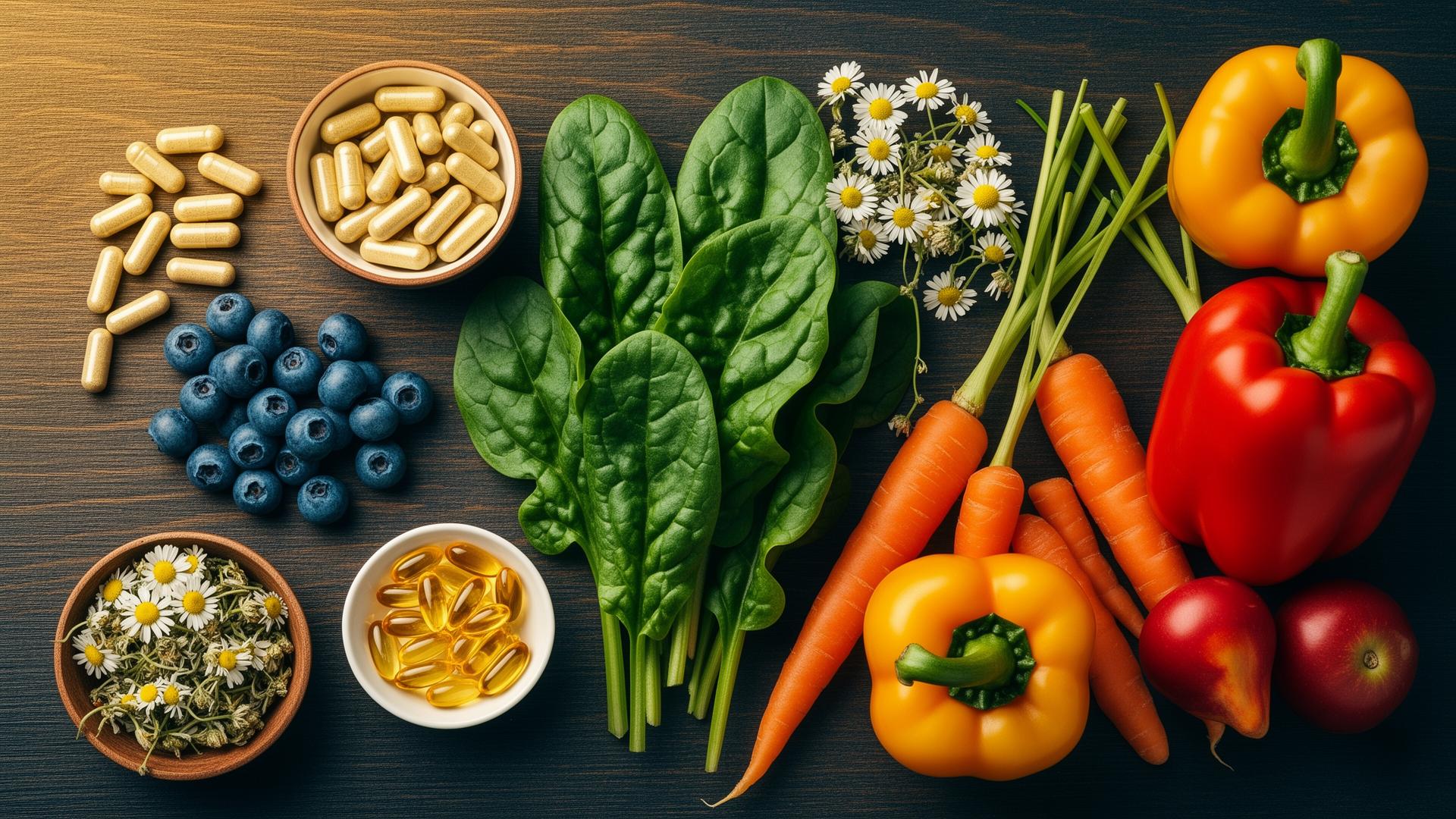
Top Natural Supplements for Better Vision
From carotenoids to antioxidants, these are the most researched natural eye health interventions used by functional medicine and naturopathic practitioners worldwide.
Lutein & Zeaxanthin
CarotenoidThese two carotenoids concentrate in the macula — the part of the retina responsible for sharp central vision. They act as a natural blue light filter and powerful antioxidant shield, protecting photoreceptors from oxidative damage.
10–20 mg lutein + 2–4 mg zeaxanthin daily
With a fat-containing meal for optimal absorption
Bilberry Extract
HerbalBilberry (Vaccinium myrtillus) is rich in anthocyanins — potent antioxidant pigments that support retinal microcirculation, accelerate rhodopsin regeneration for improved night vision, and protect capillary integrity in the delicate retinal vasculature.
160–320 mg standardized to 25% anthocyanins
Divided into 1–2 doses with meals
Astaxanthin
CarotenoidOne of the most powerful antioxidants in nature — 6,000× stronger than vitamin C. Astaxanthin uniquely crosses the blood-retinal barrier, protecting the retina from UV and blue light damage while improving ciliary muscle accommodation for near-focus flexibility.
4–12 mg daily (natural astaxanthin from Haematococcus pluvialis)
With a meal containing fat; morning or midday preferred
Omega-3 DHA
Fatty AcidDHA (docosahexaenoic acid) is a structural building block of retinal cell membranes, comprising up to 60% of the fatty acids in the retina. It supports tear film stability, reduces dry eye inflammation, and protects photoreceptor cell integrity.
At least 500 mg DHA + 250 mg EPA daily (1,000–2,000 mg total omega-3)
With meals; split dosing improves absorption
Vitamin A / Beta-Carotene
VitaminVitamin A is essential for the production of rhodopsin — the light-sensitive protein in rod cells that enables night vision. Deficiency is the leading cause of preventable blindness worldwide, causing night blindness and dry eye (xerophthalmia).
5,000–10,000 IU as beta-carotene, or 2,500 IU as preformed retinol
With a fat-containing meal; avoid high-dose retinol if pregnant
Zinc
MineralZinc is essential for retinal metabolism — it enables vitamin A transport from the liver to the retina and is a cofactor for superoxide dismutase, a key antioxidant enzyme. The retina and choroid contain among the highest zinc concentrations in the body.
15–30 mg zinc (as picolinate, citrate, or bisglycinate); pair with 1–2 mg copper
With meals to reduce nausea; avoid taking with calcium or iron
Saffron Extract
HerbalSaffron (Crocus sativus) contains crocin and crocetin — carotenoids that protect retinal cells from light-induced damage, improve retinal blood flow, and modulate inflammatory pathways implicated in macular degeneration progression.
20–30 mg standardized saffron extract (≥3.5% crocin)
Once daily, with or without food
Ginkgo Biloba
HerbalGinkgo improves ocular blood flow by dilating retinal and choroidal blood vessels and reducing blood viscosity. It's one of the most studied botanicals for normal-tension glaucoma and retinal vascular insufficiency.
120–240 mg standardized extract (24% ginkgo flavone glycosides, 6% terpene lactones)
Divided into 2–3 doses with meals
Eyebright (Euphrasia)
Traditional HerbUsed for centuries in European herbalism for eye complaints. Euphrasia contains flavonoids, tannins, and iridoid glycosides with anti-inflammatory and astringent properties. Traditionally used for conjunctivitis, blepharitis, and eye irritation.
250–500 mg dried herb extract, or 1–2 cups eyebright tea; eye drops as directed
2–3 times daily; tea can be used as a warm compress on closed eyes
N-Acetyl Cysteine (NAC) / Glutathione
AntioxidantNAC is the precursor to glutathione — the master antioxidant in the lens and aqueous humor. Glutathione depletion is directly linked to cataract formation. NAC also has mucolytic properties that support tear film quality in dry eye.
600–1,200 mg NAC daily; or liposomal glutathione 250–500 mg
On an empty stomach for best absorption, or with vitamin C
Disclaimer: This information is for educational purposes only and does not constitute medical advice. Always consult a qualified eye care professional before starting any supplement regimen, especially if you are pregnant, nursing, taking medications, or have an eye condition.
Products for Eye Health
Practitioner-recommended products to support your vision health journey.

HealthAid Eyebright (Euphrasia officinalis) Liquid 50ml
Eyebright is a traditional Western herb used for centuries in eye-comfort preparations, and this is a straightforward alcohol-based liquid extract. Modern evidence is limited, so treat it as a traditional remedy rather than a proven therapy. Taken orally, diluted in water.
View on Amazon
Holland & Barrett Pure Cod Liver Oil 1000mg (120 Caps)
A traditional source of vitamin A plus omega-3 fatty acids, both of which have long-standing roles in normal vision and tear-film quality. Cod liver oil remains one of the simplest ways to cover vitamin A without megadosing. Take with a meal.
View on Amazon
Nutrof Total Once-Daily Eye Supplement (30 Caps)
Eleven nutrients in one daily capsule, including lutein, zeaxanthin, omega-3 DHA, resveratrol, vitamin E and zinc. It is widely stocked by UK eye clinics, which is a reasonable proxy for formulation quality. Convenient if you want broad coverage without a multi-pill routine.
View on Amazon
MacuShield Original Gold
UK's best-known macular supplement combining lutein, zeaxanthin and meso-zeaxanthin. Supports macular pigment density, glare recovery and contrast sensitivity.
View on AmazonYou might also like
Still have questions?
Talk to our AI Vision Expert for personalized natural eye health guidance.