Eye Exercise & Training Guide
Master evidence-based eye exercises — from the Bates method classics to yogic Trataka. Techniques used by behavioral optometrists and natural vision practitioners worldwide.
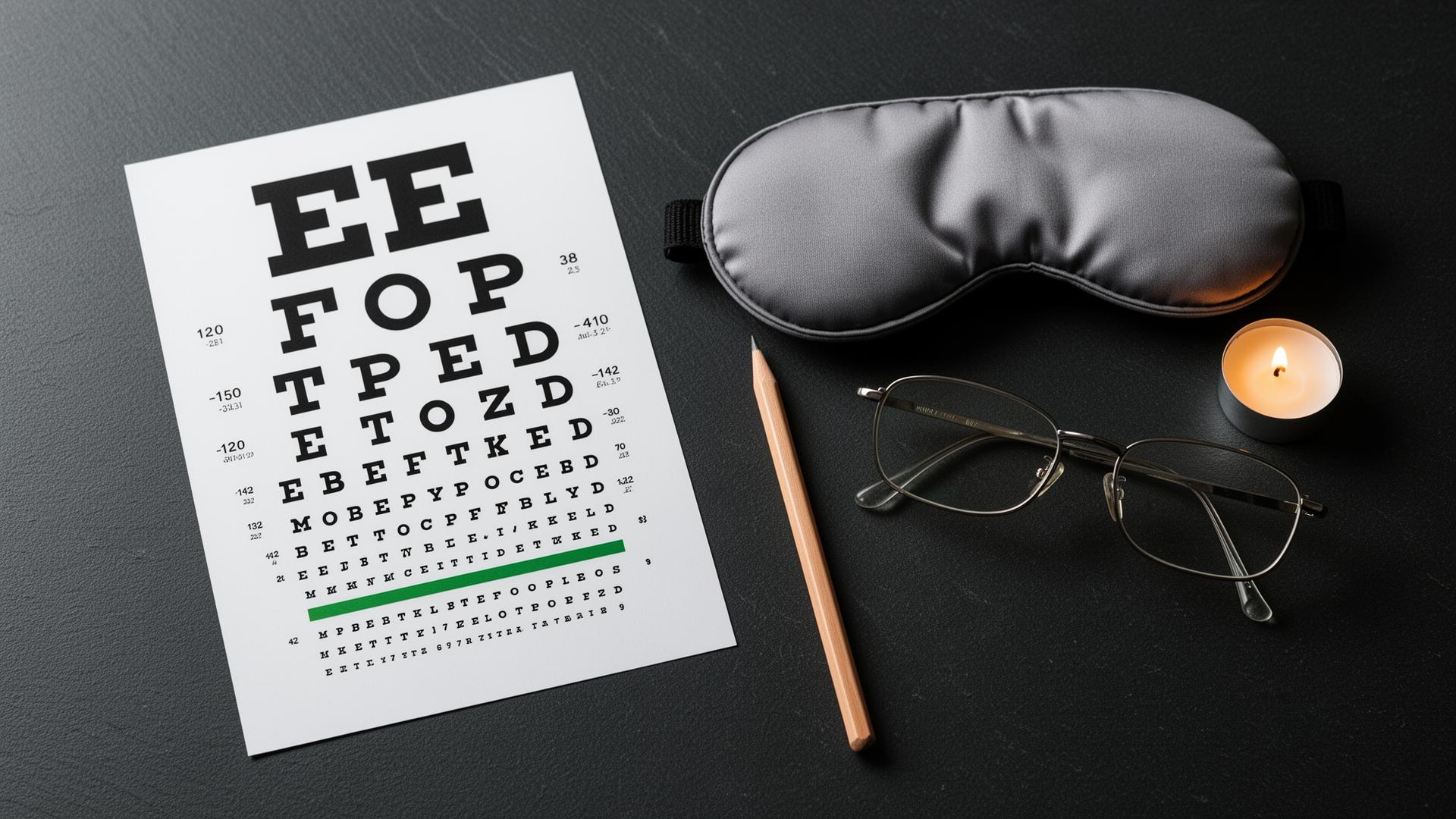
Eye Exercise & Training Guide
Master evidence-based eye exercises — from the Bates method classics to yogic Trataka. Techniques used by behavioral optometrists and natural vision practitioners worldwide.
Palming
Complete visual rest — darkness signals the retina to fully relax, reducing cortisol in the visual cortex and resetting accommodation
Rub palms together vigorously for 10 seconds to warm them. Cup hands over closed eyes without pressing on the eyeballs. Ensure no light leaks in. Breathe deeply and visualize pure blackness.
3–5 minutes per session
Sunning
Controlled light exposure stimulates retinal dopamine release, strengthens pupillary reflexes, and improves light/dark adaptation speed
Face the sun with CLOSED eyes. Gently turn your head side to side, allowing warm sunlight to wash across your eyelids. Never look directly at the sun. Start with 1–2 minutes and build up gradually.
2–5 minutes, morning sunlight preferred
Pencil Push-Ups
Convergence training — strengthens the medial rectus muscles and improves binocular coordination for comfortable near-focus
Hold a pencil at arm's length at eye level. Focus on the tip. Slowly move it toward your nose, maintaining single clear vision. Stop when the image doubles. Hold 3 seconds, then slowly move it back out. Repeat.
10–15 repetitions, 3× daily
Near-Far Focus Shifting
Accommodation flexibility training — alternately contracts and relaxes the ciliary muscle, restoring dynamic focusing range lost from sustained near work
Hold your thumb 6 inches from your nose. Focus on it for 5 seconds. Then shift focus to an object 20+ feet away for 5 seconds. Alternate back and forth. Keep both targets as sharp as possible before switching.
10–20 cycles, 2–3× daily
Figure-8 Tracking
Smooth pursuit training — activates all six extraocular muscles in coordinated patterns, improving tracking accuracy and reducing jerky saccadic movements
Imagine a large figure-8 (infinity symbol) on a wall about 10 feet away. Slowly trace the figure with your eyes, following the curves smoothly. Complete 5 cycles in one direction, then 5 in the reverse direction.
2–3 minutes, 2× daily
Bates Method Shifting & Swinging
Teaches the eyes to move naturally in small, rapid shifts (saccades) rather than staring — reducing tension and engaging the fovea for sharper central fixation
Stand with feet shoulder-width apart. Gently sway your body side to side, letting your gaze sweep across the room. Don't try to focus on anything — let objects 'swing' past. Allow the world to move, not your eyes. Practice with a finger held at nose level, shifting gaze from tip to background.
3–5 minutes, 2× daily
Tibetan Eye Chart
Full-range extraocular muscle exercise — systematically moves the eyes through all positions of gaze, strengthening weak muscles and restoring balance
Hang the Tibetan eye chart at eye level. Stand arm's length away. Starting from the center, slowly trace each arm of the pattern to its end and back. Follow the outer circle clockwise, then counter-clockwise. End with the center dot and palm.
5 minutes daily
Trataka (Candle Gazing)
Yogic concentration practice that strengthens the ciliary muscle, improves tear film quality through reflex tearing, and trains sustained focus without strain
Place a candle at eye level, arm's length away, in a dark room. Gaze at the flame without blinking for as long as comfortable (work up to 1–3 minutes). When eyes water, close them and observe the afterimage. When it fades, open and repeat.
5–10 minutes total, ideally before bed
Practitioner-Recommended Daily Routines
Morning Vision Boost
Sunning (3 min) → Palming (2 min) → Near-Far Focus (10 cycles)
Wake up your visual system with light exposure, followed by deep relaxation and accommodation activation.
Screen Break Routine
Palming (1 min) → Figure-8 (1 min) → Near-Far Focus (5 cycles)
Quick reset every 60–90 minutes of screen work. Relieves ciliary spasm and refreshes tear film.
Evening Wind-Down
Tibetan Eye Chart (5 min) → Trataka (5 min) → Palming (3 min)
Full-range muscle exercise followed by deep focus training and total visual rest before sleep.
You might also like
Get weekly eye health tips
Evidence-based natural vision strategies delivered to your inbox every Sunday.